When one of the robots drove straight off the edge of its maze, the children didn’t groan. They laughed. “The robot was goofy,” one of them explained later, and meant it as a compliment. That small moment captures something the UNBC team behind a summer-long study didn’t set out to find: when a robot stumbles in front of kids, the failure can become part of the fun rather than a reason to quit.
Over two months this summer, researchers from UNBC’s Computer Science program, supervised by Dr. Shruti Chandra, ran one of the larger studies of its kind: 234 children, ten summer camps, five games, and two robots. The study was built around one deliberate constraint: no screens at all.
__No touchscreens allowed__
Many robots designed to teach children come with a tablet parked beside them. It’s the easy way to show a question or track a score, but it also means a child spends much of the time looking at glass instead of at the robot. The UNBC team wanted to know what happens if you remove the screen entirely and make everything physical.
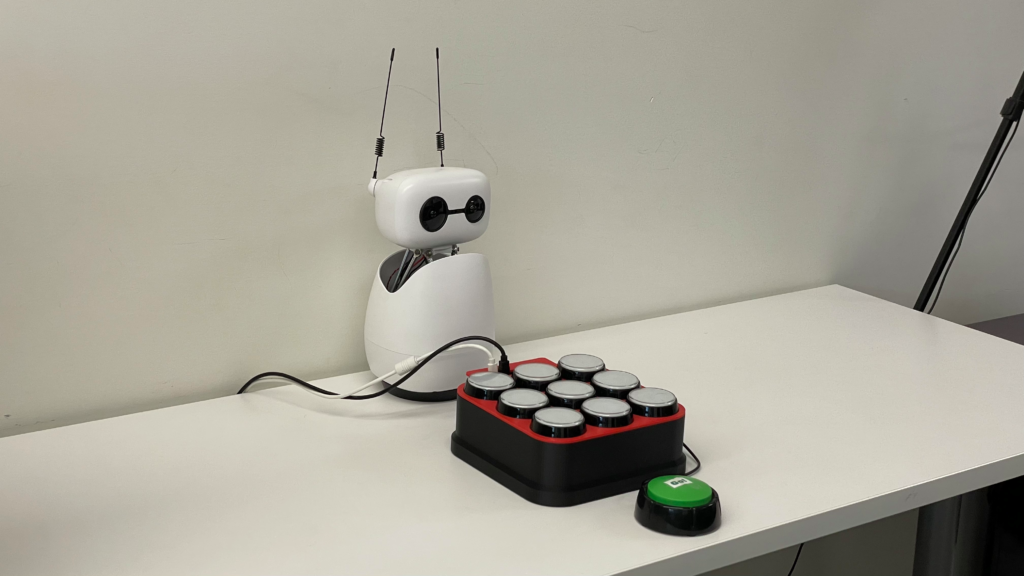
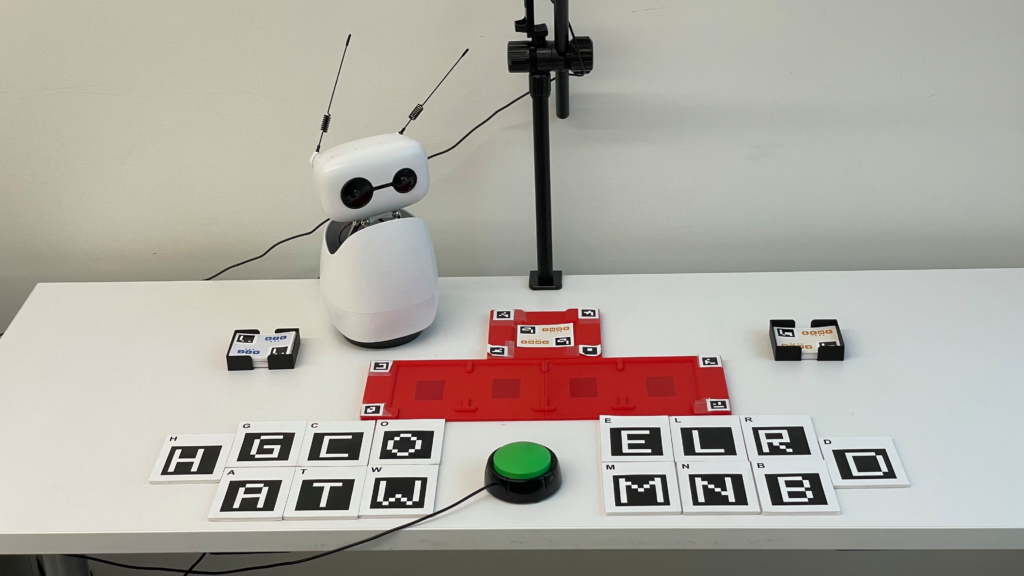
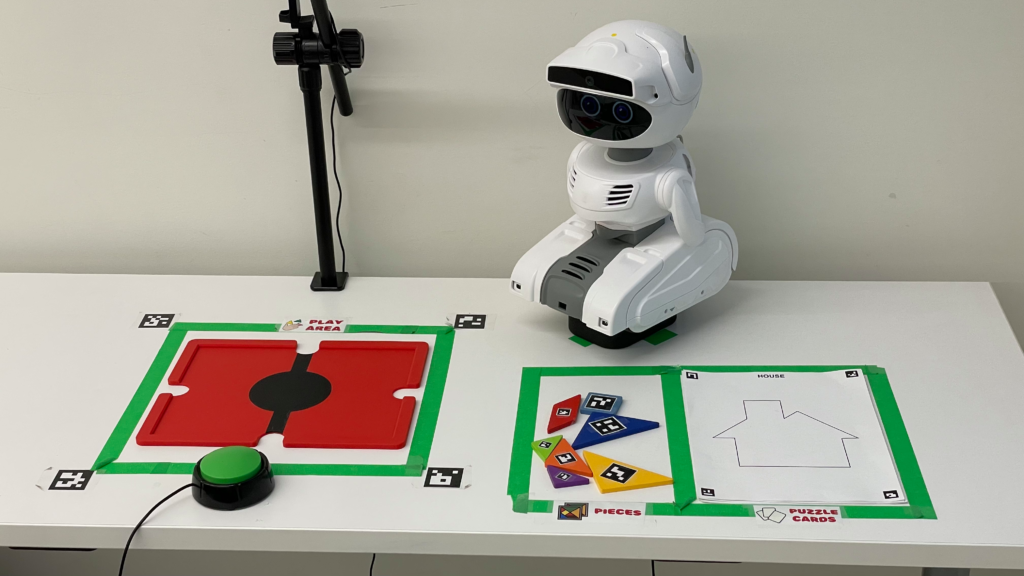
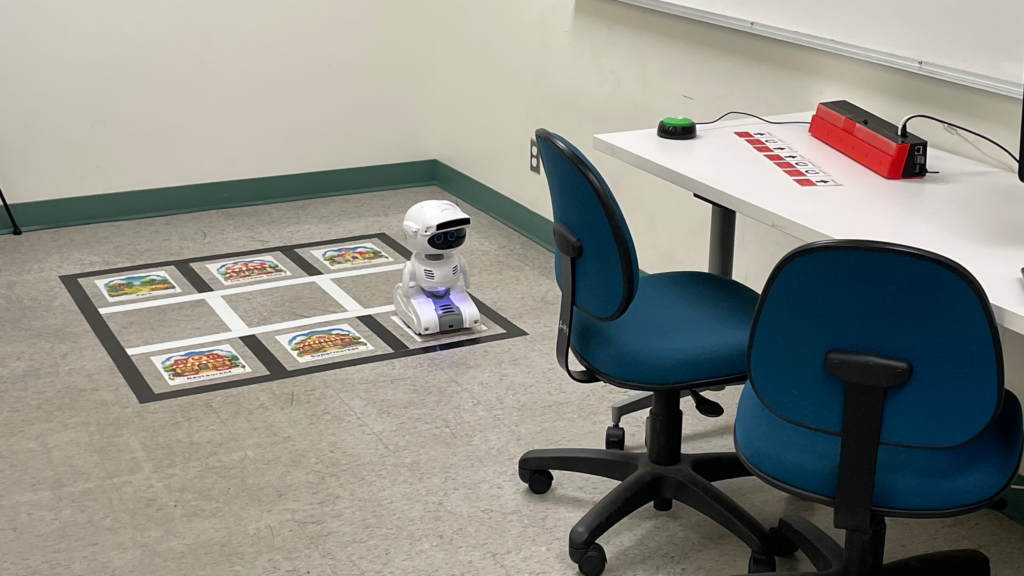
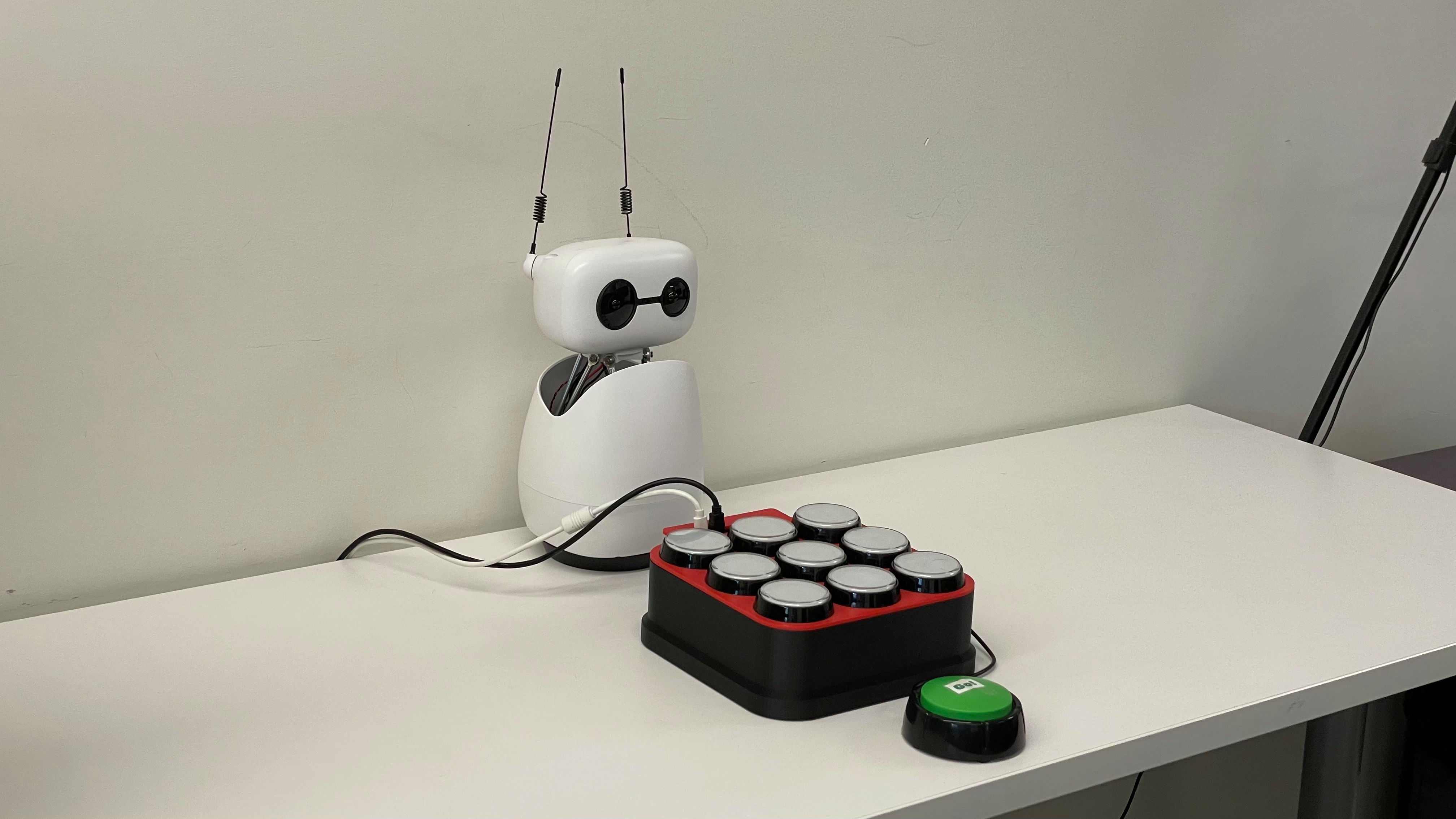
At two stations in opposite corners of a camp room, children played in pairs. One station was built around Misty II, a mobile robot with an animated LCD face; the other was built around Reachy Mini, a small, expressive tabletop robot that gestures with its head and antennas. Everything the kids touched was a real object: letter tiles, puzzle pieces, cards, and buttons. The robots watched, spoke, reacted, and kept score, running fully autonomously and completely offline. Once a pair pressed the big green start button, no adult stepped in unless something went wrong.
__Five games, two age groups__
The team built five games, tuned for two age groups (ages 6 to 8 and 9 to 12): *Scramble Words* (unscrambling animal names from letter tiles), *Tangram Time* (fitting seven tangram pieces into a shape for the robot to inspect), *Memory Matrix* (repeating a growing sequence of lights on a button grid), *Misty Maze* (programming the robot’s path through a floor maze with direction cards), and *Match Point* (a fast reaction game, racing to touch the body part the robot calls out). Some were collaborative and some were competitive, but all were designed to be both fun and educational.
__The engineering behind the play__
The friendly surface hid a serious amount of engineering. The robots “saw” the games through a mix of sensors: ArUco markers (printed patterns a camera reads much like a QR code) tracked puzzle pieces and each child’s ID lanyard; RFID readers sensed the maze cards; an illuminated button grid ran the memory game; and camera-based body tracking powered the reaction game. To speak naturally without an internet connection, the robots used a small language model (Qwen3, run locally through Ollama) for greetings and encouragement, while the rules and feedback were scripted so that every child heard the same instructions. Everything ran on-device, which kept the games reliable in a busy camp and kept children’s data on local machines.
__Doing research with children, responsibly__
Working with kids means ethics come first. Families received consent forms before each camp, and while every child was welcome to play, only the data of children whose guardians consented was analyzed. A researcher stayed in the room throughout for safety, stepping in only when needed. The result was a study that felt like camp to the kids and like a controlled experiment to the team.
__What the children actually did__
A few findings stood out once the team dug into game logs, video, and interviews.
Kids kept going even when they struggled. In Misty Maze, pairs finished the full route only 13 percent of the time, yet they spent about ten minutes on it and kept trying, a strong sign that low task success didn’t mean boredom. Older children solved more tasks than younger ones in the same amount of time, which points to an efficiency gap rather than an effort gap. There was no difference in success between boys and girls.
To study the social side, the team coded 58 session videos (9.2 hours of footage) against a 33-behaviour checklist in a tool called BORIS, with two researchers independently coding a share of the videos to keep the coding consistent. Emotional reactions were the most common behaviour of all. Interestingly, how kids behaved depended more on which game they were playing than on how old they were.
And then there was the goofy-robot effect. When the system failed to register a correct answer, that was the number-one reason kids disliked a game. But when the robot itself blundered, like driving off its own map, children found it hilarious. Its mistakes became a feature, not a bug.
__The screen-free verdict__
Close to nine in ten children said they enjoyed the games, and about the same share wanted to play again. Memory Matrix was the runaway favourite. Most tellingly, when asked what they’d want in their own classroom, children drifted away from screens and toward the physical setup they had just tried.
The team’s broader conclusion reframes the whole idea of a robot “interface.” Taking the screen away, they argue, doesn’t remove the interface; it spreads it out across the robot, the child, their partner, the physical objects, and the room itself. Design for all of it, and screen-free robots can hold the attention of a room full of kids for a whole summer.
__What comes next__
The full results are written up in an academic paper the team has submitted for peer review. But the human version is simpler. For two months, hundreds of children in northern BC thought they were just playing games with a couple of robots. They were also helping to answer an open question in modern computing and proving, along the way, that sometimes the most memorable thing a teaching robot can do is drive off the map and get a laugh.