# __Bears Don’t Really Hibernate… Or Do They?__
__Do you also think bears hibernate all winter?__
I did too!
I always imagined bears crawling into their cozy dens in the fall, falling into a deep sleep, and waking up when spring arrived. But then I learned something in my ecology class that completely blew my mind:
__Bears don’t quite hibernate in the way we usually think they do.__
Instead, bears enter a state called __torpor__, or __winter dormancy__. Their metabolism, heart rate, breathing and body temperature all decrease, allowing them to conserve energy during the winter when food is scarce. Unlike many small mammals that hibernate, however, bears don’t experience the same dramatic drop in body temperature.
And here’s the really interesting part: __they can wake up.__
Bears can respond to disturbances and may even leave their dens during warmer winter conditions.
So, what does this mean for us during winter?
It means that just because bears are less visible doesn’t mean they have completely disappeared. If you’re hiking, snowshoeing, skiing or exploring areas where bears live, it is important to stay aware of your surroundings and give potential den sites plenty of space. __A bear den is definitely not a place you want to investigate.__
Bears are also conserving their energy throughout this period and relying on the fat reserves they built up before winter. If they are disturbed and become active, they may be dealing with both the stress of being disturbed and the challenge of finding food during a season when it is scarce.
So yes, that peaceful-looking winter bear is getting some serious rest — but it isn’t completely switched off.
And if it does wake up?
Well… after months without a meal, it might not be in the best mood.
__Angry + hungry = HANGRY.__
So enjoy the snow, enjoy the outdoors, and give those bears the space they need. Because sometimes the safest bear encounter is the one that never happens.
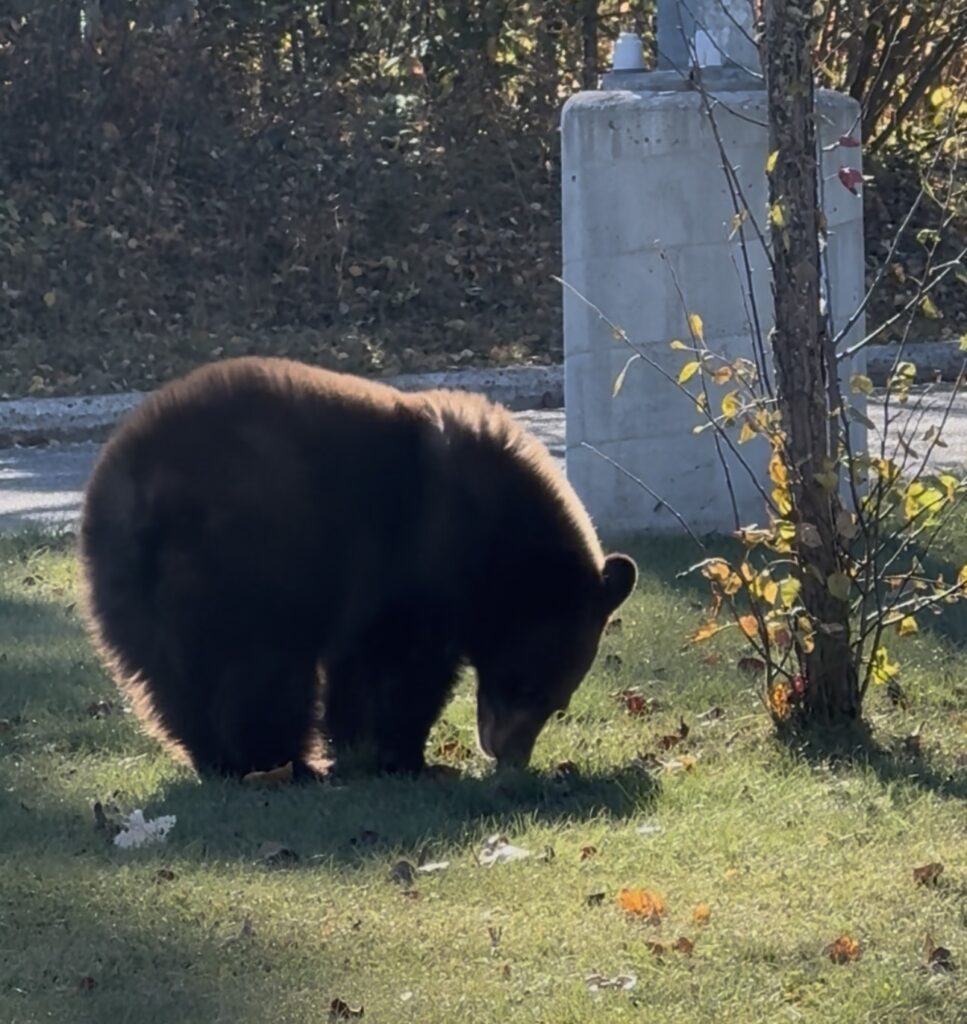
A cub spotted outside NSC last year (October 2025).
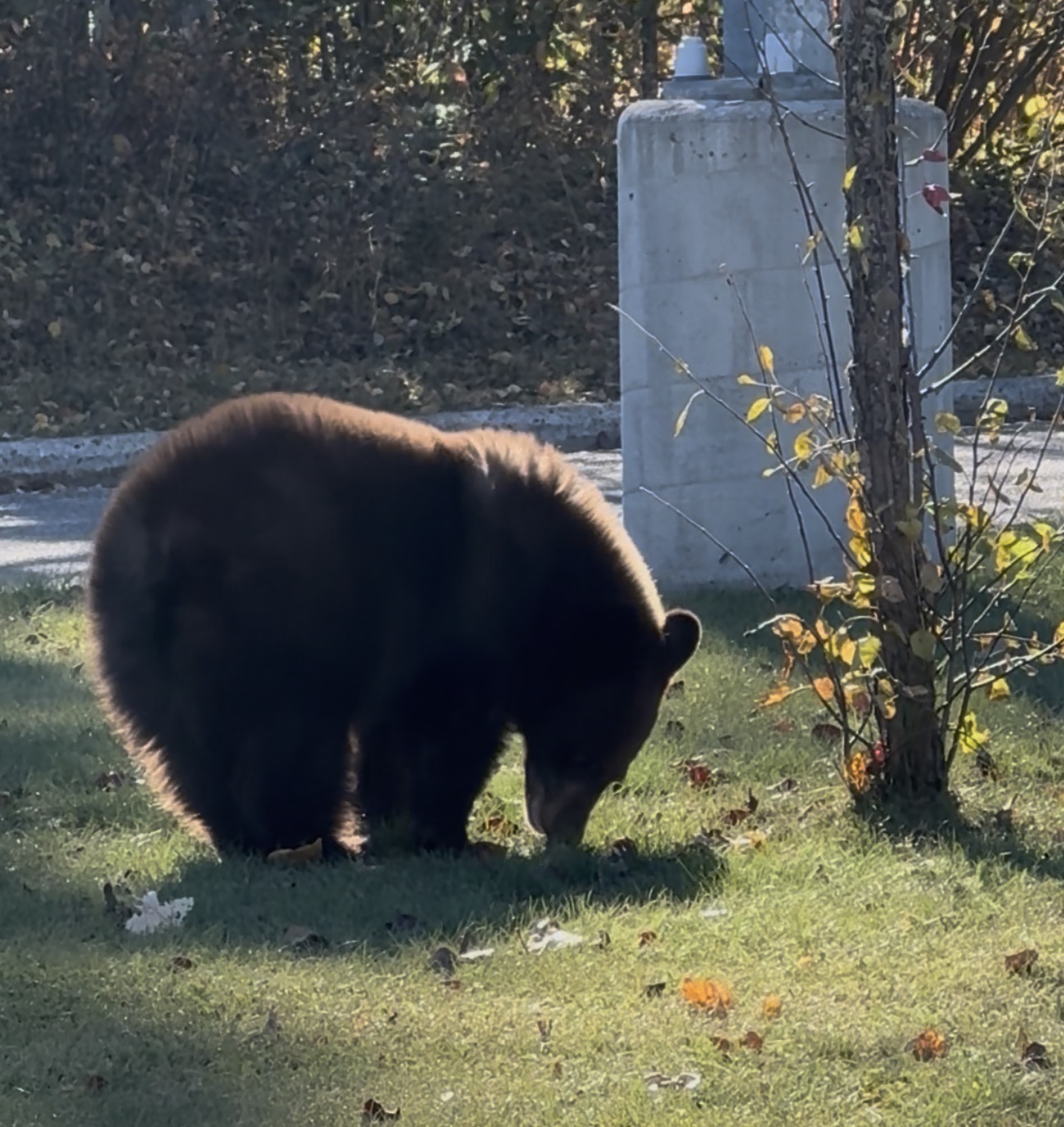
A cub spotted outside NSC last year (October 2025).