I met Parnian through her mother, Dr. Hoori Jahanbani, a senior scientist at UNBC. The family had moved to Canada from Iran for her mother’s postdoc position. They have since relocated to the United States for another postdoc opportunity.
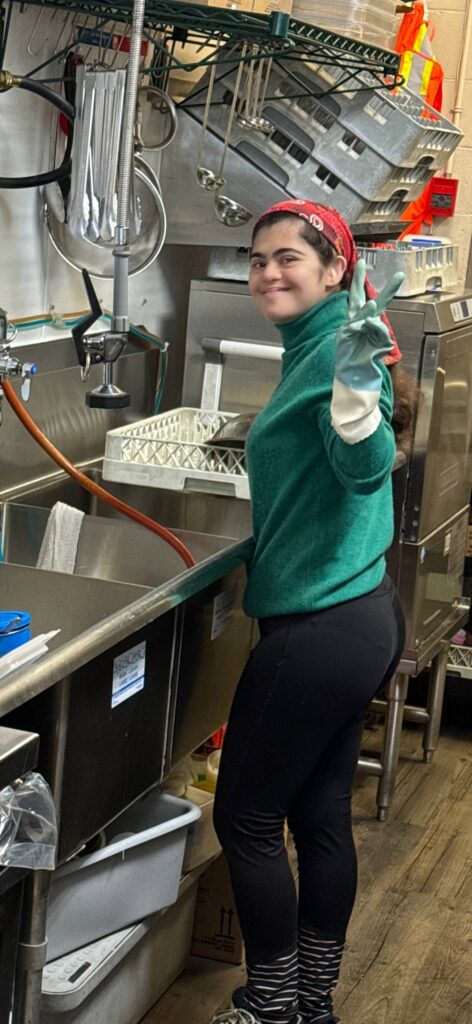
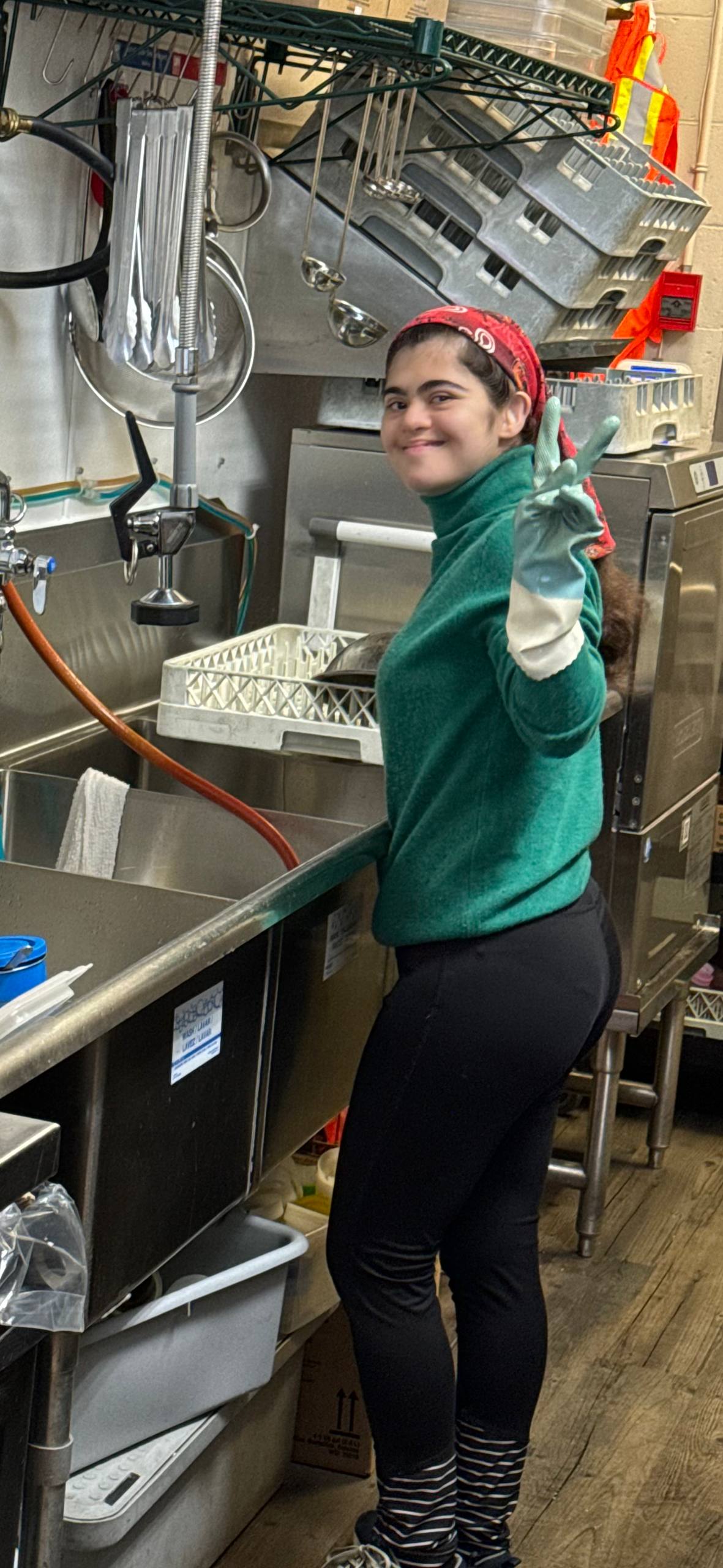
What struck me about Parnian wasn’t that she has Down syndrome; it was everything else. Back in Iran, she’d been inspiring millions through her Instagram (@parnian_hamidi, with over 70,000 followers) and TV interviews. Before her family moved to California, Parnian’s goal was to join UNBC’s undergraduate program.
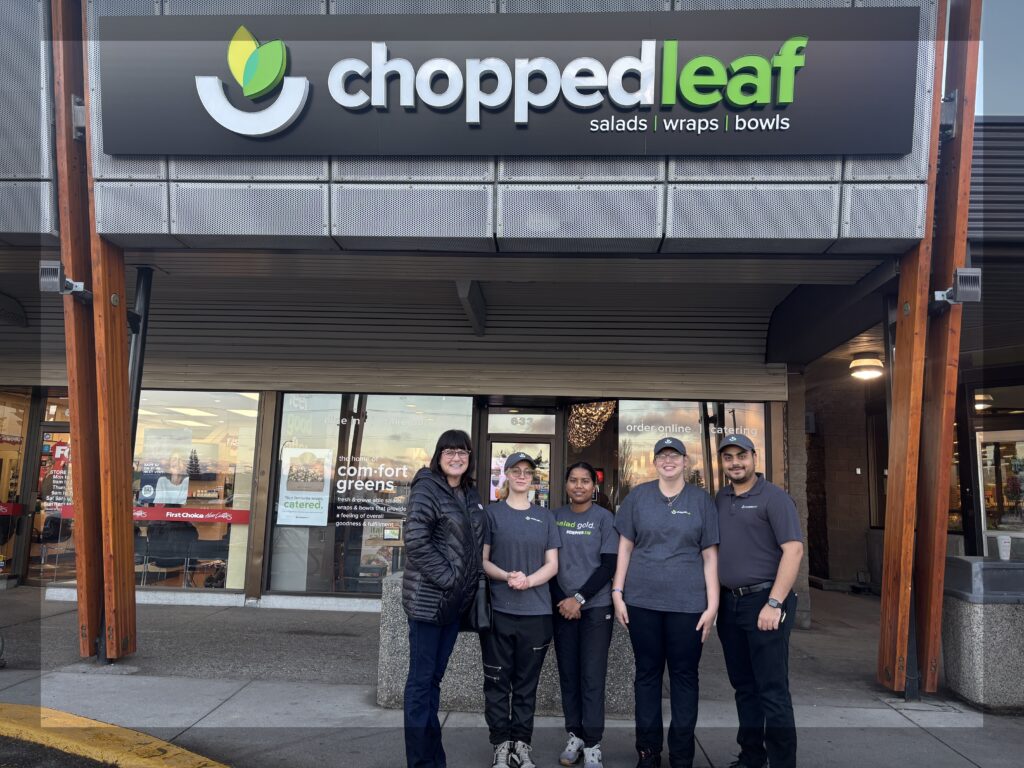
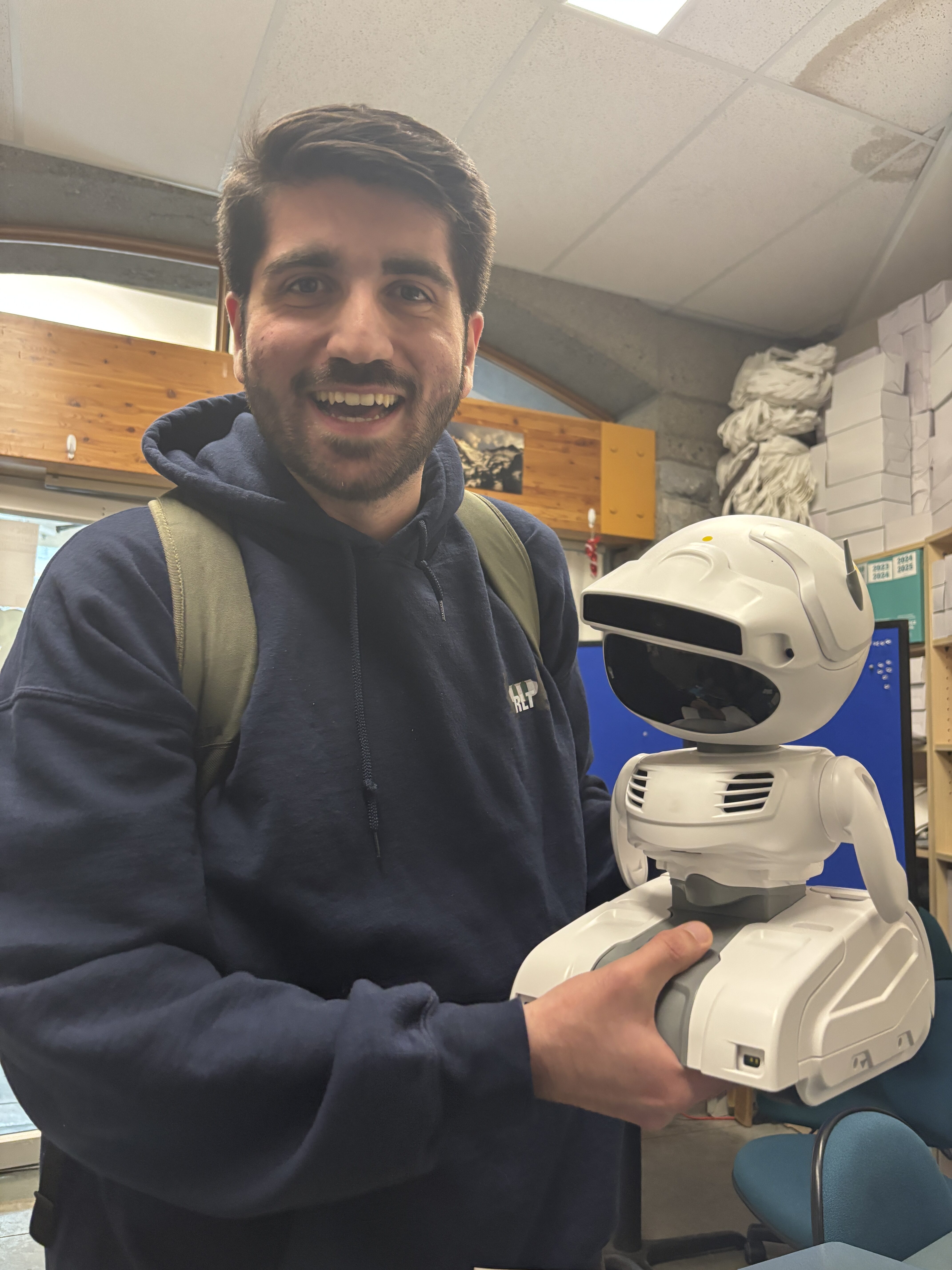
When I heard she’d found work in Prince George during her time here, I had to know more. I reached out to Dr. Jahanbani, Kerri (Taylor’s mom and the previous manager of Chopped Leaf), and Meetkumar Patel (the new manager).
## How the Pieces Came Together
Parnian’s brother Parsa was working at Chopped Leaf in Spruceland Mall. That fall, he asked manager Kerri if his sister could get a job there too. Kerri said yes without hesitation.
“I truly believe that everybody deserves a chance to show what they’re capable of doing,” Kerri told me.
For Kerri, it was personal. Her daughter Taylor has autism and had been working at Chopped Leaf since January 2024. When Kerri suggested Taylor try working at the restaurant, Taylor wasn’t interested until Kerri mentioned she’d get paid. “It was like a light bulb went off.”
By June, Taylor had made massive progress. Now she’s chopping cucumbers, prepping peppers, and developing knife skills Kerri never expected. So when Parsa asked about Parnian, Kerri already knew it could work.
## Structure, Repetition, and Realistic Expectations
Kerri’s approach was straightforward: “Keep it very simple. Break down the tasks.” She never had unrealistic expectations. The other staff were crucial. Kerri told them: treat Taylor and Parnian with kindness and respect, but also treat them like they belong there and are actually working there. It worked. When Parnian started, Kerri planned to ease her in, maybe four o’clock start, home by six. Parnian showed up at three and wanted to work till eight. The next day, same thing. “There was no hesitation. She just loved it.”
## Does the Disability Checkbox Actually Help?
*”The label of having a disability, something you’re born with, something you had no choice in, should not prevent you from being given the opportunity to show what you’ve worked hard to achieve,”* Dr. Jahanbani said. She’s advocated for people with Down syndrome for decades.
*”Kerri gave Parnian this opportunity because she has a child with special needs herself; she understood. But whether it’s Iran, Canada, or the United States, I’ve seen the same barrier everywhere.”*
In both Canada and the US, employers supposedly receive benefits for hiring people with disabilities. Applications ask about it. But in reality, it often becomes a negative point that causes applications to be rejected.
*”Parnian has applied to several places here in the US. She’s the same motivated, hardworking person. But until someone gives her the opportunity, she cannot show her true self.”*
## Can Government Do More?
Here’s the frustrating part: there isn’t much accessible support in BC for businesses that want to hire people with disabilities. “Funding is a lot of work and it takes a lot of time to apply,” Kerri explained. The funding is individualized, meaning you need to apply separately for each person. “They want you to jump through hoops. And have proof.” When Chopped Leaf was recently sold to new ownership, manager Meetkumar Patel kept Taylor on. When I met with both Kerri and Patel, his response about the funding process echoed Kerri’s: it’s too complicated. When I suggested that if the process was simpler (just put in your information, get the money, hire them, done), Patel agreed immediately. “But if it’s complicated, I’m not going to do it. There’s so much else to deal with.”
Both managers want the same thing: a system that makes it actually feasible to give people a chance.
## More Than Just a Paycheck
For Taylor, having a job changed everything. Before, she’d sleep till noon with nowhere to go. Now she’s ready before her mom. “I love my money. I love to put it in my account,” Taylor said. She’s saving for a dream vacation.
Patel has noticed something important about her presence: “Whenever she’s here, everybody’s happier. She’s talking with us, joking around. When she’s not here, everybody’s just doing their job.” Sometimes Taylor forgets to take breaks. “We have to tell her, ‘Okay, you have to go home,’” Patel laughed.
**That’s the thing about giving people with disabilities actual employment: when they find the right fit, they stay. The work gives them purpose, community, and confidence.**
Restaurant work is hard. “It’s a lot of work for not a lot,” Kerri acknowledged. But Taylor and Parnian proved they could do it. Kerri’s advice to other employers? **”Give them a chance, they are more than capable.”**
Taylor is approaching her second anniversary at Chopped Leaf, thriving under new ownership, loved by her coworkers, and proving every day that when you give someone the opportunity, they show you what they’re truly capable of.
Businesses like Chopped Leaf, where both previous manager Kerri and current manager Meetkumar Patel have walked the talk on inclusive hiring, are rare. That’s exactly why they deserve a shoutout.
Chopped Leaf is in Spruceland Mall, Prince George. If you want to support a business that practices what it preaches on inclusion, go grab your lunch there.