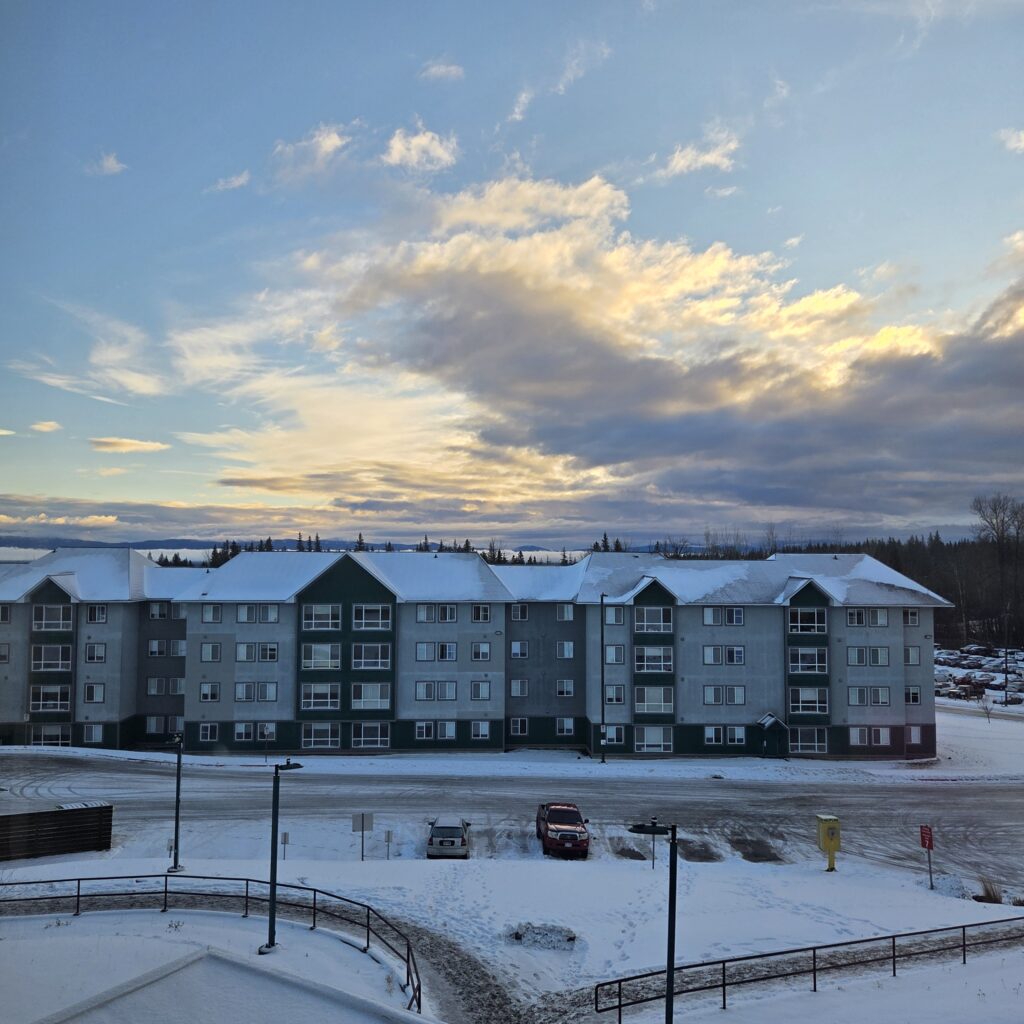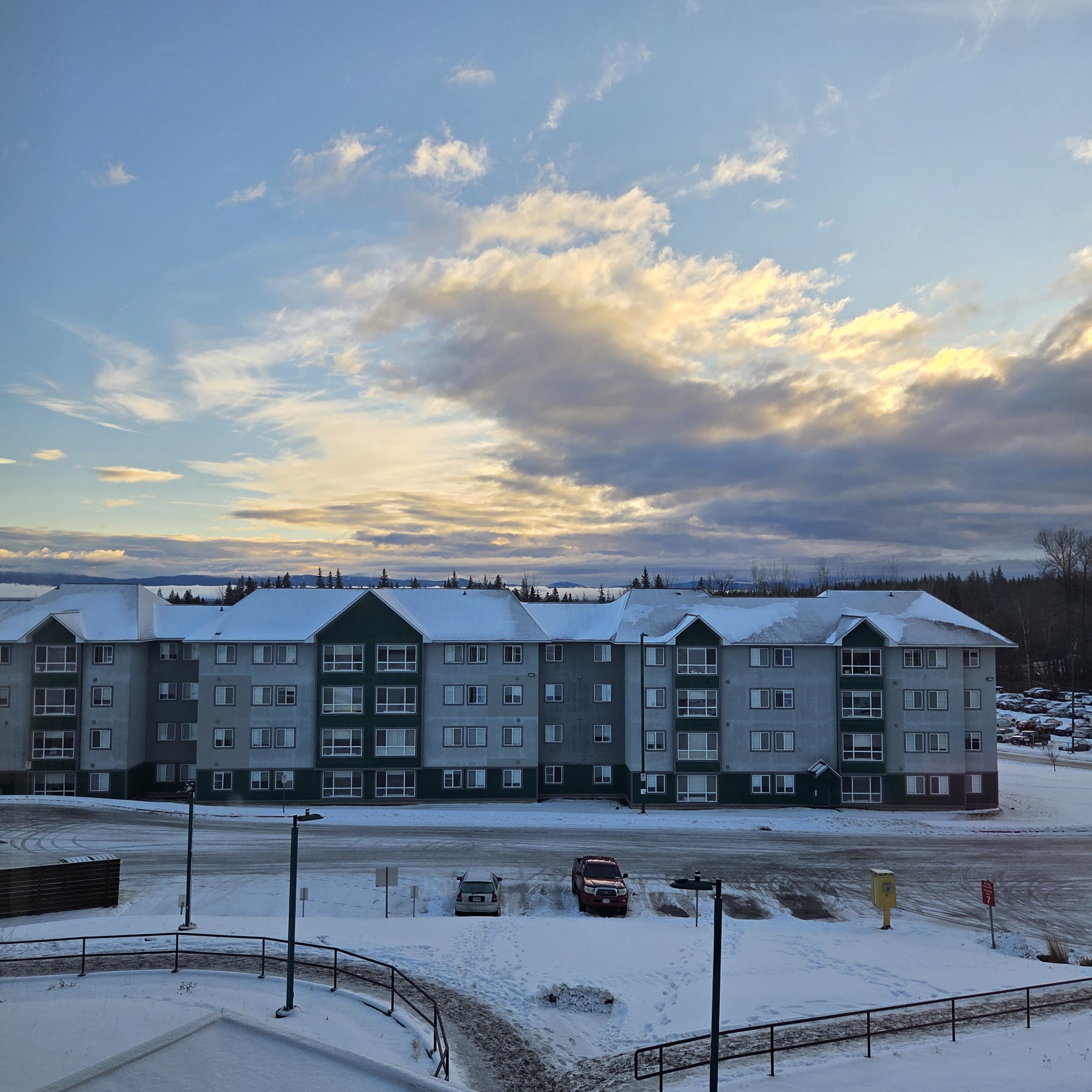
It’s winter again. Prince George is covered in snow, temperatures drop fast, black ice is everywhere and daylight feels almost nonexistent. It looks beautiful from indoors, but stepping outside is a different story. Walking to class in the cold while trying not to slip can be exhausting. Here are a few ways to get through the winter semester (hopefully in one piece).
## Gear Up
Fashion matters, but staying healthy matters more. You will still need to get to class no matter how cold it gets, and getting sick or injured is the last thing you want. Dress in layers so you can adjust once indoors, cover exposed skin, and invest in gloves and boots with *good grip*. Black ice is common; a single slip can easily result in an injury that disrupts your semester. A warm, waterproof jacket (or two in case you need variety) that is rated for extreme cold (yes, the temperatures can reach -40°C) is essential. Thermal socks, a good scarf and even ice cleats can make daily commutes much safer and more comfortable.
## Plan Your Time Realistically
Winter slows everything down. Walking through snow takes longer, buses can be delayed or canceled, and even getting ready takes extra time because of layers. Leave at least five minutes earlier than usual for classes, shifts or appointments. This small buffer reduces stress and helps you arrive settled rather than rushed. Keep an eye on transit updates and try not to rely on tight schedules; standing at a bus stop in freezing temperatures is not something you want to do for longer than necessary.
## Figure Out When You’re Most Productive
Short days and limited sunlight can affect energy levels, focus and sleep patterns. Instead of forcing productivity all day, pay attention to when you naturally feel most alert. Schedule studying, assignments and group work during those hours. Use lower energy periods for simpler or repetitive tasks, like organizing notes, answering emails or attending events. Working with your energy levels rather than against them can make winter far less overwhelming.
## Pick Up a Fun Activity
Reduced sunlight can lower serotonin levels, which affects mood and motivation. Having something to look forward to can make a significant difference. Try picking up a new hobby or activity that fits into the season, ideally something low pressure and enjoyable. This could be crocheting, journaling, reading, ice skating, going to the gym or learning a new skill. Even small routines can help break the monotony and add structure to otherwise long, dark days.
## Find a Comfort Drink or Snack
Winter is the perfect time to lean into small comforts. Whether it’s a hot drink from Degrees, Good Earth or another favorite spot, find something that feels like a treat. Use it as motivation to start your day or as a reward after completing tasks. Pair it with a study session, a walk across campus or some quiet time with a book. These small habits can make your days feel warmer and more manageable.
## Take It Slow
Not in terms of walking (yes, black ice exists), but in terms of pace. Winter can be mentally exhausting and it is normal to feel less motivated and more tired. Give yourself permission to slow down without falling behind. Take things one step at a time and create small things to look forward to each day. This could be catching up with a friend over coffee, attending an event, enjoying your favorite drink or working on a personal project. Progress doesn’t have to be fast to be meaningful.
You will get through winter. When it finally ends, spring and summer will be waiting. Good luck with the winter semester!