Every March, UNBC’s Iranian Student Association hosts Nowruz, the Persian New Year celebration. One of the association’s core values is being the voice of their community in Prince George. This year, that voice carries the weight of mourning since late December 2025.
UNBC has one of the largest Iranian student populations in northern BC, with many pursuing Master’s and PhD degrees in engineering, health sciences, and natural resources. Combined with professionals working in Prince George’s engineering and healthcare sectors, about 220 Iranians call this city home. Right now, most of them have limited or no contact with their families.
This isn’t the first time UNBC’s Iranian students have watched their homeland in crisis. In 2022, the Woman, Life, Freedom movement erupted after Mahsa Amini’s death in police custody. Students organized vigils on campus, attended by UNBC staff, and tried to amplify voices from Iran. That movement was met with violence too, but this time the scale is different.
In late December 2025, protests erupted across Iran. The regime’s response was swift and brutal: security forces opened fire on crowds with machine guns. By mid-January 2026, estimates put the death toll above 30,000. On January 8, 2026, the regime cut internet and phone communications nationwide. As of late January, the digital blackout had lasted over 20 days.
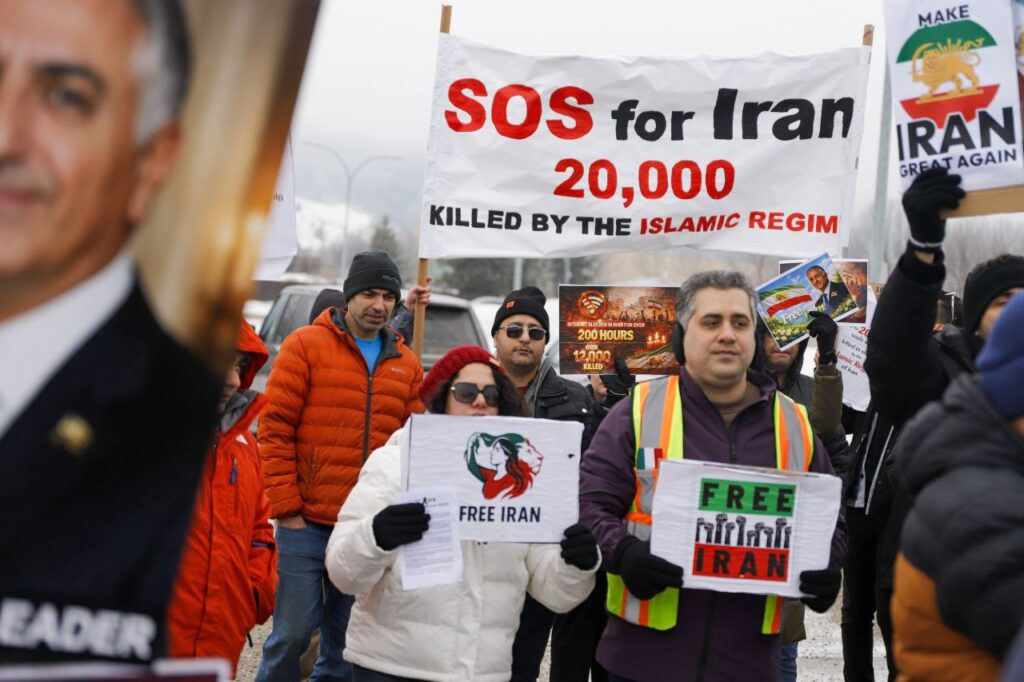
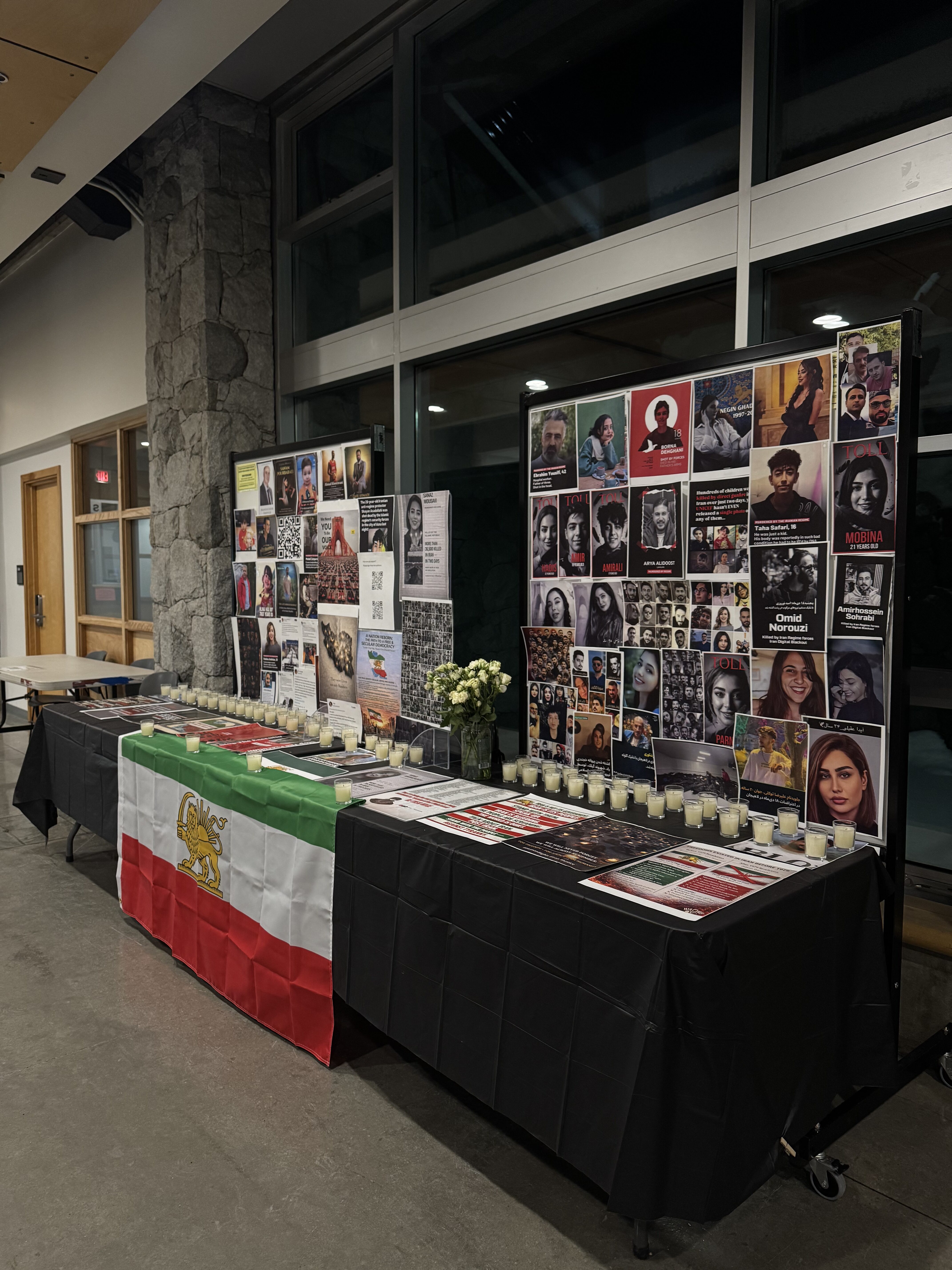
The Prince George Iranian community has gathered multiple times, including protests in the city and a candlelight vigil at UNBC for those who lost their lives. Protesters hold up photos of Reza Pahlavi, the eldest son of the last Shah of Iran and a critic of the current government. Over The Edge has been following the Iranian community’s response over the past month, attending gatherings and speaking with students about what they’re experiencing.
Bruce Danesh, founder of the UNBC Iranian Student Association, spoke at a recent gathering: “We are doing our best to be the voice of our families and friends and students back in our country that can’t speak and shout for their freedom. We call it our duty to show the face of this regime and say that they are not us and the people of Iran are rejecting them.”
“Students across Iran aren’t showing up to their classes. They’re facing threats, many are in jail and in danger of execution.”
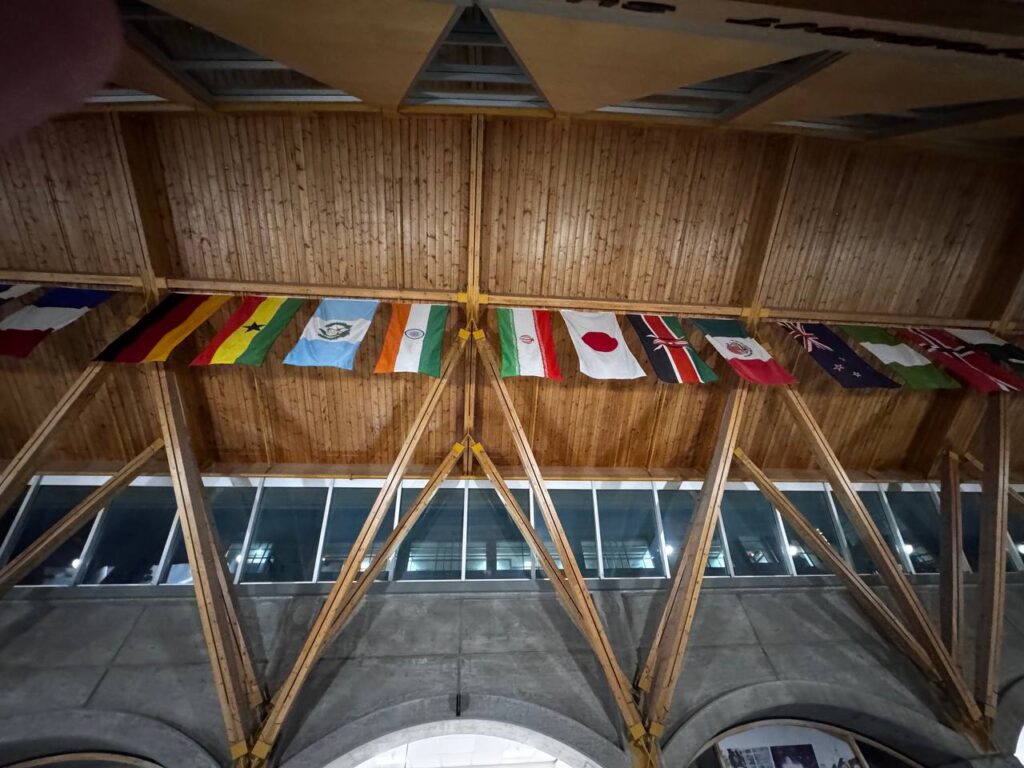
On January 18, Iranian students made a specific plea to their university. “For Iranian students at UNBC, walking past the current flag displayed on campus is traumatizing,” said Hossein, a UNBC PhD student. “It is not a national symbol for us; it is the symbol of the very regime that is killing our loved ones right now. We are asking UNBC to remove this ‘bloody flag’ and help us feel safe on campus.”
UNBC administration responded. The provost sent an email addressing the concerns, and the decision was made to take down flags representing specific causes to maintain neutrality on campus. The Iranian flag was removed, along with other flags.
The feedback from the broader UNBC community was mixed. An Iranian Master’s student told Over The Edge: “We wished it was just taking down our flag. We didn’t even expect a replacement. We didn’t want other flags to go down, but still, we appreciate the UNBC administration taking action to support us, and we hope that other international students don’t take it the wrong way, as this was not our intention or request. We’re thankful to UNBC for hearing our voice and responding with action.”
At other universities, the response has been different. Some simply removed the Iranian regime flag, while others replaced it with the sun and lion flag representing the opposition movement.
Bruce, who grew up in Iran and has been part of UNBC’s Iranian community since 2018, spoke about the regime’s propaganda in conversations over the past month.
“They said it’s Mossad and Trump,” Bruce explained. “You don’t know anything. We have lived with them for decades. We have seen their mental games to keep us under control. How can you blame Israel or Trump for the killing and imprisoning of healthcare professionals and lawyers who defend those who have been shot, arrested, or face execution?”
“The reality on the ground contradicts any narrative about external forces orchestrating the protests,” he continued. “Students shared that families aren’t even getting bodies back. Women’s bodies are missing, reportedly showing signs of assault. The regime exchanges the dead only for money. These are government agencies. These are only a few examples.”
“It’s a military state at this point. My friends are talking about suicide, about having no hope. It’s devastating,” another UNBC Iranian student said.
At the gatherings, students shared a message for the UNBC community: follow them on social media and see what they’re sharing. They say the Iranian regime is portraying itself as a victim, hiding behind Palestine and blaming Trump and Israel for everything happening. “Yes, we know the political games the big players like Trump and the West are playing, but our people have had enough. We want this regime gone.”
“Sanctions? The regime gave billions of dollars to Assad’s regime, Yemen, Iraq, and their proxy wars instead of investing in their people’s quality of life. Now they blame sanctions.”
**UISA Team Message to Non-Iranians:** Please be our voice. Follow your Iranian friends on social media to see what they are sharing, not non-Iranians who defend this criminal regime.
There is an ocean of blood between the regime and the people of Iran. We want the regime gone forever.