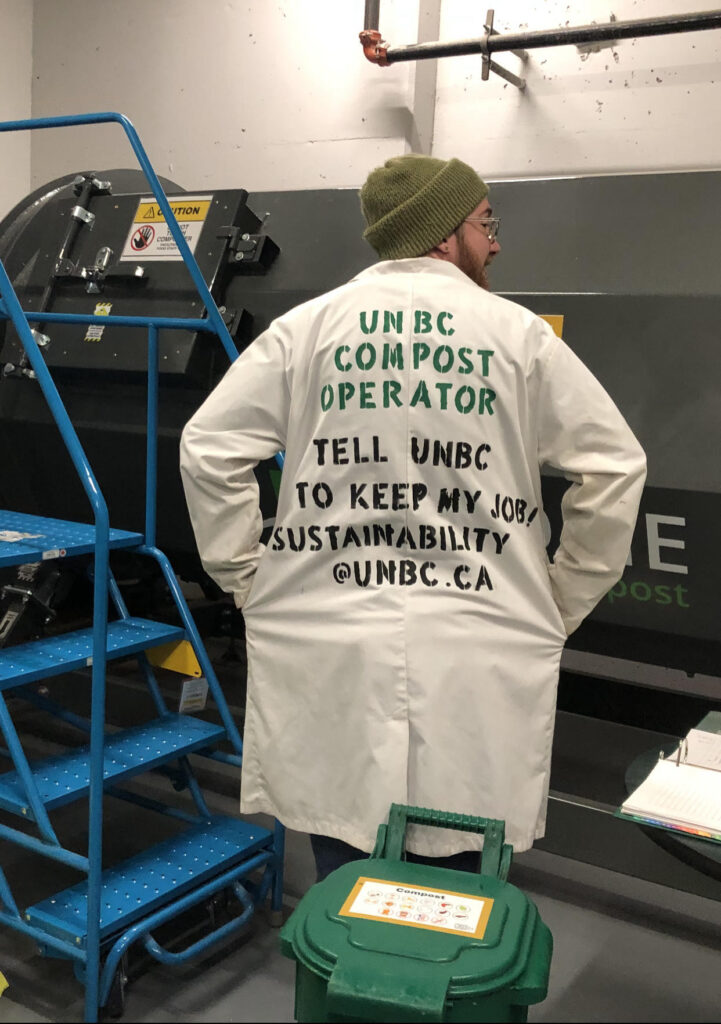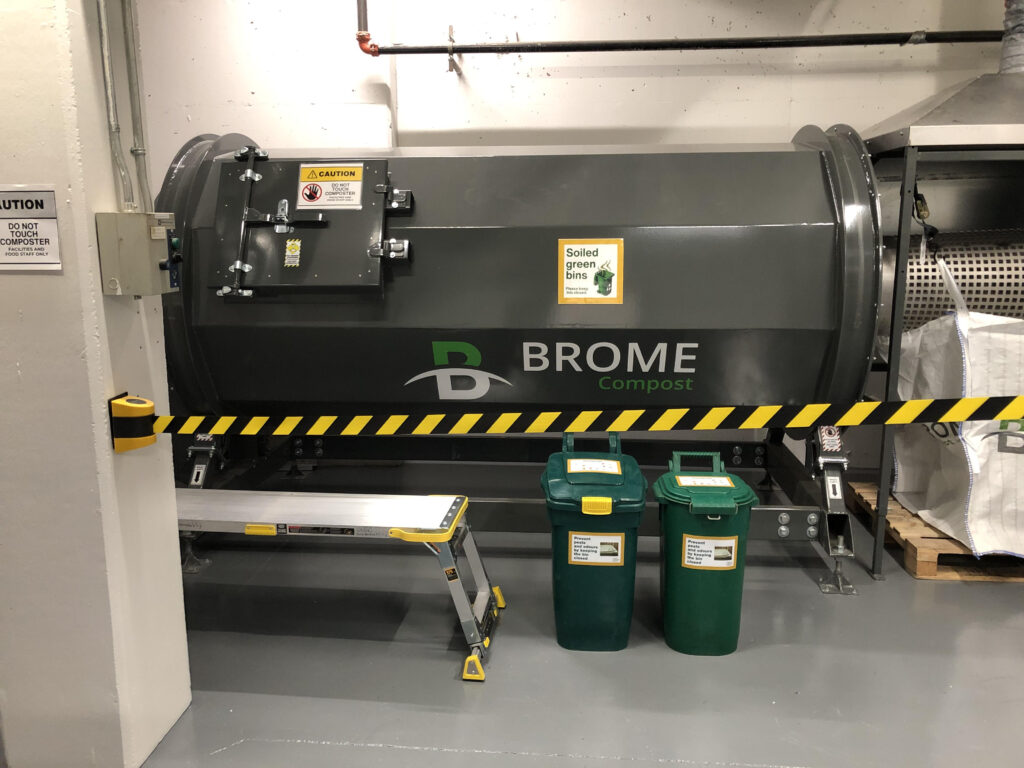
In September 2024, UNBC launched a shiny, new composting program, featuring a $100,000+ in-vessel composter. By the Fall 2025 semester, campus food scraps were going in the garbage again. What happened?
The program was set up to fail before it even began because Facilities management refused to acknowledge that, by definition, composting is a managed process. Decomposition occurs on its own in nature, but composting is decomposition fine-tuned for desired outcomes such as an efficient low-odour process, elimination of pathogens and the production of a high-quality soil amendment. Successful compost program delivery requires attention to logistics, labour requirements, public education and an understanding of the basic science of composting.
Composting programs fail without someone to manage them. This isn’t just my opinion. It’s the consensus view held by waste management industry professionals, community composting practitioners and academics alike, and is supported by a mountain of case studies.
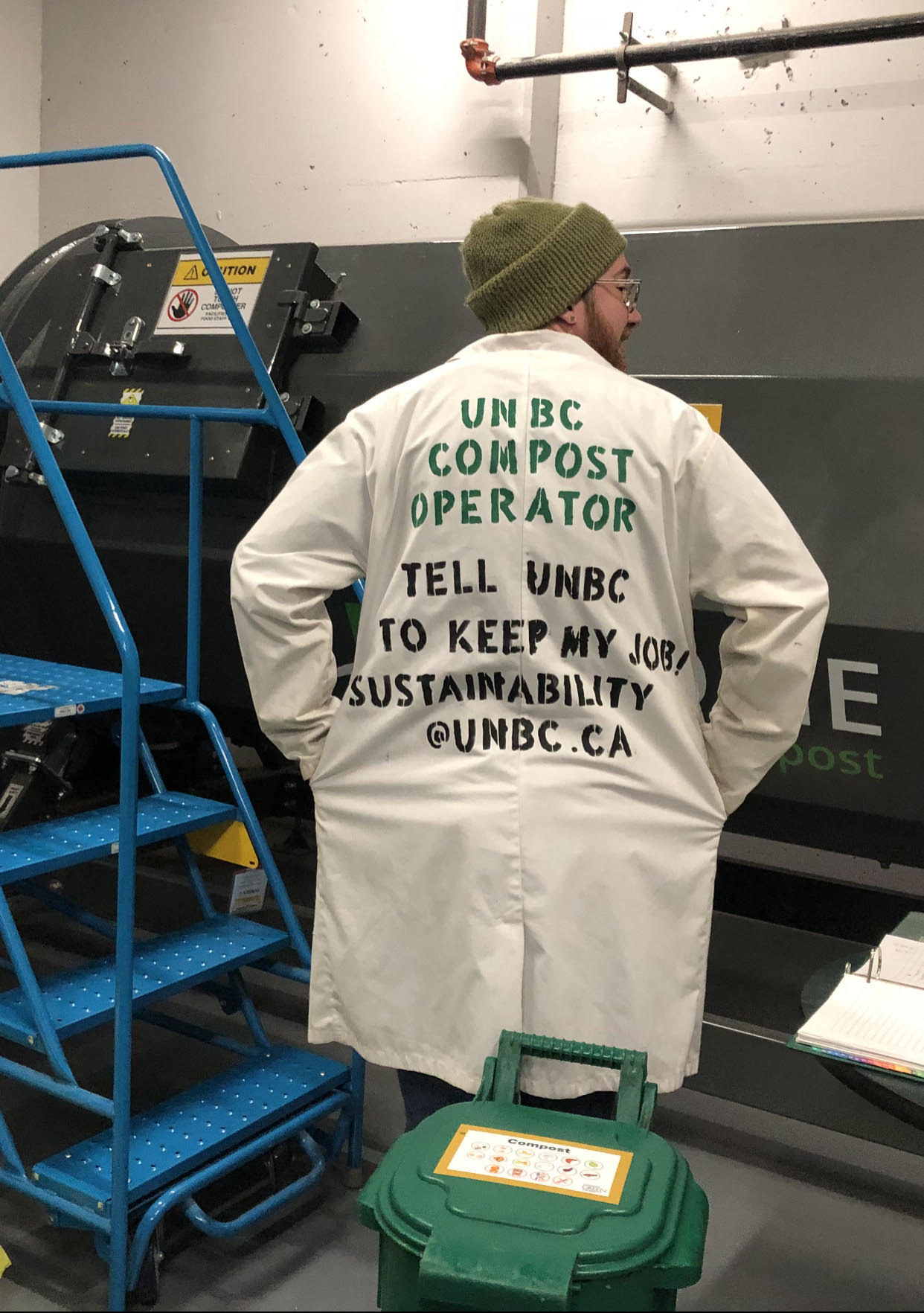
Despite overwhelming evidence, Director of Sustainable Facilities and Ancillary Services David Claus structured the Compost Operator position as a one-time student contract. Despite the urging of Sustainability Manager Ann Duong and over a hundred letters of support from the UNBC community, his plan remained unchanged. After the operator contract ended, Maintenance Assistants were supposed to absorb the labour associated with the composting program with no additional support. Predictably, it didn’t work.
On a recent visit to campus, I watched as a dining hall employee wheeled buckets of food scraps past the recycling room, which houses the $100,000+ in-vessel composter, and into the garbage compactor. If the Facilities department would allocate just $20,000 a year – a drop in the bucket for an institution this size – to create a permanent part-time operator position, UNBC could continue to have a thriving composting program. UNBC could divert tens of thousands of kilograms of food scraps from the landfill, reduce greenhouse gas emissions and produce compost to enhance soil health. But it just doesn’t seem to be a priority for “Canada’s Green University.”